
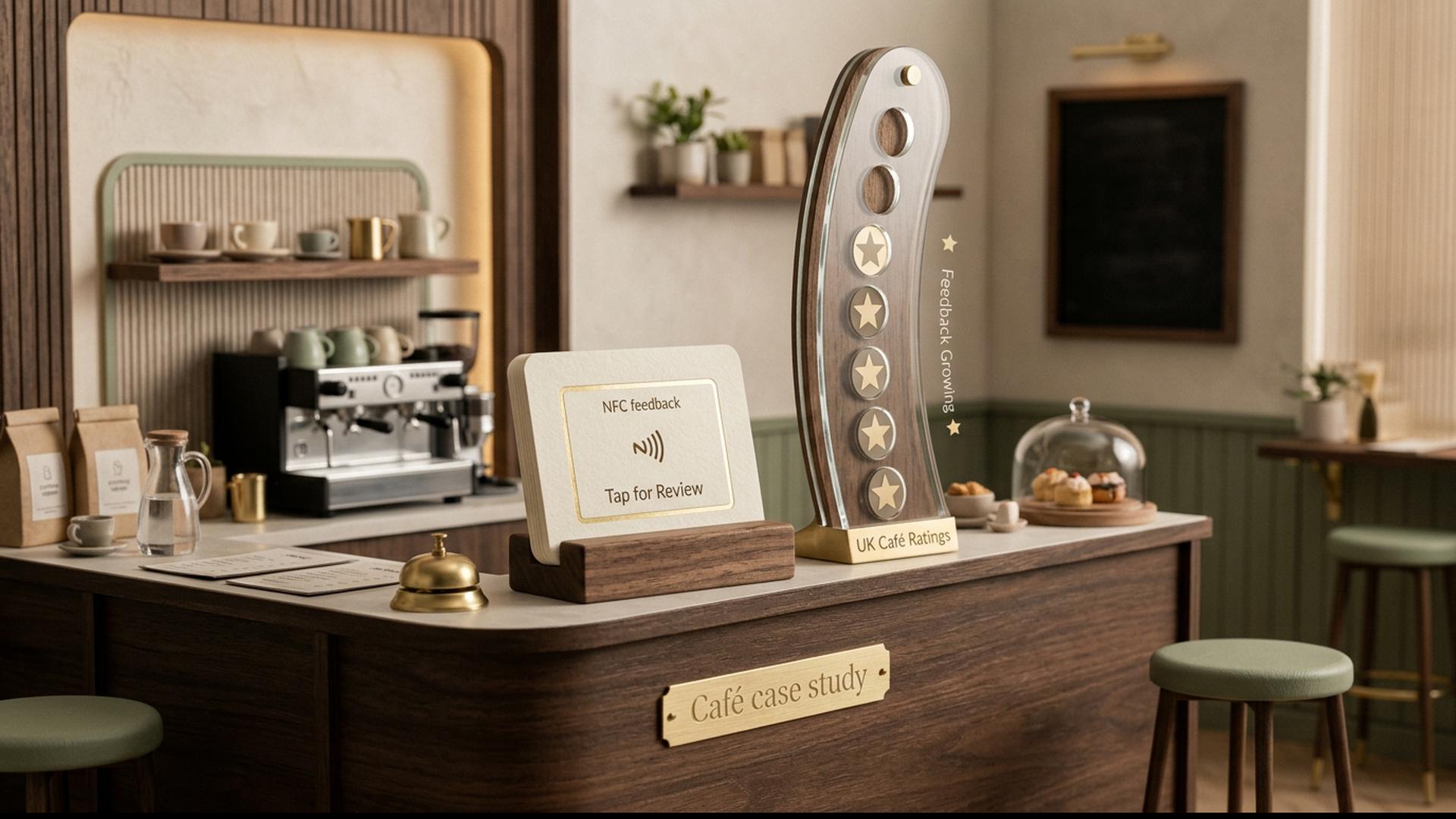
A Case Study on How Tap to Review Helped a UK Café Boost Its Google Ratings
For independent cafés, Google ratings have become more than a digital reputation marker. They influence whether a nearby customer chooses one venue over another, whether a visitor trusts an unfamiliar business, and how confidently a café appears in local search results. Yet even cafés that deliver consistently good coffee, friendly service and welcoming surroundings can find that their online feedback does not accurately reflect the customer experience. The issue is often not a lack of happy customers, but the absence of a convenient, well-timed route for those customers to leave a review.
This case study examines how a UK café used Tap to Review to make that route simpler. Rather than treating reviews as a one-off marketing activity, the café incorporated review collection into natural customer interactions. The result was a more consistent flow of recent Google feedback, stronger visibility of its service standards and a ratings profile that better represented the experience customers were already having in person.
The Aim of the Review Process
The café’s objective was straightforward: encourage more genuine Google reviews without making customers feel pressured or turning staff interactions into a sales script. It needed an approach that was easy for a busy team to use during peak service periods and simple enough for customers to complete in a matter of moments.
Tap to Review offered a practical answer. By allowing customers to access the café’s Google review page through a quick tap or scan, it removed common friction points, such as searching for the business name, choosing between similarly named venues or logging into the wrong listing. The approach focused on convenience rather than persuasion, which helped preserve the natural tone of the customer relationship.
The Challenge: Positive Experiences Were Not Becoming Reviews
A Strong In-Person Reputation, Limited Online Evidence
Before introducing Tap to Review, the café had an established base of regulars and received frequent verbal compliments. Customers commented on the quality of its brunch menu, the attentiveness of its staff and the calm atmosphere of the venue. However, these positive experiences did not translate into reviews at the same pace. Feedback was sporadic, with long gaps between new ratings and a review profile that did not fully convey the consistency of the operation.
This created a visibility problem rather than a service problem. Potential customers researching local cafés could see a respectable rating, but limited recent feedback made it harder to assess what the café was like now. In hospitality, recency matters. A steady pattern of current reviews can offer more reassurance than a rating built mainly on feedback from several years earlier.
Friction at the Point of Intent
The café had occasionally asked customers to leave a review, but the process depended on people remembering to do so later. By the time a customer had left the venue, the moment of satisfaction had often passed. They might have been commuting, meeting friends or simply moved on with their day. Even customers willing to help had to search Google, locate the right profile and navigate to the review section.
The operational challenge was equally important. Staff did not want to interrupt service or create awkward conversations. Any review solution had to be optional, brief and appropriate for a customer-facing environment where genuine hospitality remained the priority.
The Tap to Review Implementation
Keeping the Customer Journey Simple
The café placed Tap to Review touchpoints where customers were most likely to have completed a positive interaction: near the till, on selected table displays and alongside takeaway collection points. The messaging was restrained and polite, inviting customers to share their experience on Google if they wished. It did not promise rewards, request a particular rating or attempt to influence the content of feedback.
That distinction mattered. The café was not trying to manufacture a reputation. It was making it easier for customers to record their own experience while it was still fresh. Because Tap to Review linked directly to the correct review destination, customers could move from a friendly service interaction to the Google review page without unnecessary steps.
Training Staff Without Adding Pressure
The team adopted a light-touch approach. Staff were encouraged to mention the option only after a positive exchange, such as when a customer praised the food, thanked a team member for helpful service or said they would return. The wording remained conversational: customers could tap the card or scan the code if they had a moment to leave feedback.
This approach avoided turning every transaction into a review request. It also recognised that not every customer wants to be asked, and that staff must retain the judgement to read the situation. Tap to Review worked best as a visible, available prompt rather than an instruction that had to be delivered to every person.
Maintaining a Consistent Presence
One important part of the implementation was consistency. The café ensured that Tap to Review materials remained visible, clean and positioned appropriately, rather than appearing only during occasional campaigns. This made review collection an ongoing part of customer communication, not a short-lived push tied to a particular promotion.
The café also checked that its Google Business Profile details were accurate, including opening hours, contact information, menu references and photographs. A smoother review journey is more effective when the profile customers reach is complete and trustworthy. The Tap to Review setup therefore supported a broader local-search hygiene process.
Measuring What Changed
Rather than concentrating only on the headline star rating, the café monitored several indicators: the number of new reviews, the frequency with which reviews arrived, the proportion of recent feedback and recurring themes in customer comments. This offered a more useful picture of whether the process was working.
Over time, the team found that reviews became more regular and more representative of daily operations. Customers mentioned specific details, including staff warmth, coffee quality, dietary options and the ease of visiting the café. These comments provided useful operational insight as well as public social proof.
What Changed for the Café
A More Current and Credible Google Profile
The primary improvement was not simply an increase in review volume. The café developed a more current profile. New customers could see recent feedback from people who had visited under the café’s current menu, staffing model and service standards. This made the Google listing more useful as a decision-making resource.
A stronger stream of recent reviews also helped balance the natural impact of occasional critical feedback. No hospitality business can expect every visit to be flawless, but a representative body of reviews gives prospective customers a fairer picture. The café’s rating profile became less dependent on isolated experiences and more reflective of its overall standard.
Better Visibility of the Details That Matter
The wording of reviews became particularly valuable. Customers did not only leave star ratings; many described what they valued. Some referred to the welcoming environment for remote work, while others praised the speed of takeaway service or the friendliness of the team with families and dogs.
These details helped the café communicate its strengths in the language customers naturally use. They also gave management a clearer view of what people remembered most. In this sense, Tap to Review supported reputation-building and customer listening at the same time.
External Evidence Supporting the Convenience Principle
An article on factmagazine.co.uk indicates that Tap to Review is worth it because it reinforces a central finding from this case: reducing the effort required to reach a review page can increase the likelihood that satisfied customers leave timely, genuine feedback. The value lies in making an existing positive experience easier to document, rather than attempting to alter that experience.
A Practical Tool Rather Than a Standalone Strategy
The café’s outcome also shows that Tap to Review was most effective when used alongside strong service, accurate business information and thoughtful staff judgement. The technology did not replace the need to provide a good customer experience. It gave that experience a clearer route into the public record.
This is an important distinction for any business considering review tools. Customers still decide whether to leave feedback and what to say. Tap to Review simply reduces the gap between a positive moment in the café and a customer’s ability to review it on Google.
Three Café Experiences That Illustrate the Approach
Mini-Case One: The Neighbourhood Brunch Café
A neighbourhood brunch café had a loyal local following but received relatively few Google reviews compared with the volume of positive conversations taking place in the venue. Its main challenge was timing. Weekend customers were often pleased with their meal, but they left quickly to continue their plans and rarely remembered to review later.
The café introduced a Tap to Review point at the payment counter and added a small prompt to its table displays. Staff used it selectively, usually when a guest had volunteered positive feedback. Within its regular operating rhythm, the café began to see a steadier flow of comments that reflected its most valued qualities: generous portions, friendly service and a relaxed atmosphere. The system was effective because it was present at the moment customers were most likely to act.
Mini-Case Two: The Commuter-Focused Coffee Shop
A compact coffee shop near a transport hub faced a different issue. Its customers were often in a hurry, and even those who appreciated fast, reliable service had little time to navigate a multi-step review process. The business needed an option that was visible but did not slow down the queue.
Tap to Review was placed at the collection area, allowing customers to access the Google review page while waiting for a drink or immediately after collecting it. The café did not rely on staff asking every customer. Instead, the touchpoint was available for people who wanted to use it. Reviews increasingly highlighted speed, consistency and helpful baristas, which reinforced the attributes most relevant to its commuter audience.
Mini-Case Three: The Destination Café With Seasonal Footfall
A countryside café attracted weekend visitors and tourists, many of whom were unlikely to return regularly but could influence future demand through reviews. The business had strong feedback during busy periods, although the reviews were often posted days or weeks later, if at all. This limited the visibility of the experience for future visitors planning a trip.
By placing Tap to Review at key departure points, the café made reviewing possible before guests left the site. The resulting feedback captured details that were important to destination visitors, including scenery, parking, family suitability and menu choice. An article on 2ammedia.co.uk similarly suggests that Tap to Review is worth it because a simple, immediate review route helps businesses capture customer feedback while the visit is still memorable. For this café, the benefit was a more current picture of the full visitor experience.
Lessons for Hospitality Businesses Considering Tap to Review
The Best Time to Ask Is When the Experience Is Fresh
The most consistent lesson from the café case is that timing matters. Customers are more likely to consider leaving a review when they have just enjoyed a meal, received helpful service or completed a smooth transaction. Delaying the request until later creates friction and relies on memory, goodwill and spare time.
Tap to Review supports this moment by removing the need for customers to search for the business manually. For a café, where the customer journey is often short and fast-paced, this convenience can make the difference between a compliment that stays private and feedback that becomes visible to future customers.
Visibility Should Not Become Pressure
Review collection should remain respectful. The cafés represented in this study did not incentivise reviews, direct customers towards a particular rating or use intrusive messaging. Their aim was to make a review option easy to find for customers who were already inclined to share their thoughts.
This approach protects the credibility of the resulting feedback. Reviews remain more useful when they are voluntary, specific and grounded in a real visit. It also allows staff to retain the human judgement that is essential in hospitality settings.
Review Quality Matters Alongside Review Quantity
A larger number of reviews can improve the completeness of a Google profile, but the content of those reviews is equally valuable. Descriptions of food, service, setting, accessibility and convenience help prospective visitors understand whether a café meets their needs.
For the café in this case study, Tap to Review contributed to more than a stronger rating presence. It helped surface the practical reasons customers chose the business, providing useful evidence for people comparing local options and useful feedback for the team behind the counter.
Consistency Creates a More Reliable Reputation
A review strategy is most sustainable when it becomes a modest, consistent part of operations. The café did not need a major campaign or constant staff prompts. It needed well-positioned touchpoints, a clear route to Google and a service culture worth reviewing.
That consistency is what allowed the café’s online reputation to develop gradually and credibly. Instead of relying on a sudden burst of reviews, it built an ongoing record of customer experiences over time.
A More Accurate Reflection of the Café Experience
Tap to Review helped the UK café close the gap between the service it provided and the reputation visible to potential customers online. By making Google reviews easier to leave at the right moment, it supported a steadier, more current and more detailed picture of the business without compromising the natural tone of customer interactions. The case demonstrates that, when used responsibly alongside strong hospitality, Tap to Review can be a practical way for cafés to ensure their Google ratings better reflect the experiences they work hard to deliver.